

Business Equipment Isn’t a Purchase… It’s a Partnership
When I first started my business, I wasn’t thinking about building a manufacturing company. I was thinking about getting through the next order. Like most new business owners, every purchase felt enormous. Spending a few hundred dollars made me nervous. Spending several thousand dollars felt almost irresponsible.
At the time, I didn’t understand something that would completely change the way I looked at equipment years later. I didn’t understand that business financing is different than personal financing. I didn’t understand return on investment. I didn’t understand that the true cost of a machine isn’t what you pay on day one. It’s what it costs you over the next ten or fifteen years.
The need for me was something that would help me create more customized products. The very first piece of automation I ever purchased wasn’t a CNC router. It was a laser engraving system. At roughly $7,000, it was one of the largest purchases I had ever made for my business. Looking back today, that number doesn’t seem nearly as intimidating, but at that stage of my career it felt huge. I remember waiting for it to arrive like a kid waiting for Christmas morning. The possibilities seemed endless. Custom engraved tabletops. Personalized furniture. Higher profit margins. For the first eight months, everything was exactly as I had hoped. The laser worked. Customers loved the designs. Orders kept coming in. Life was good!
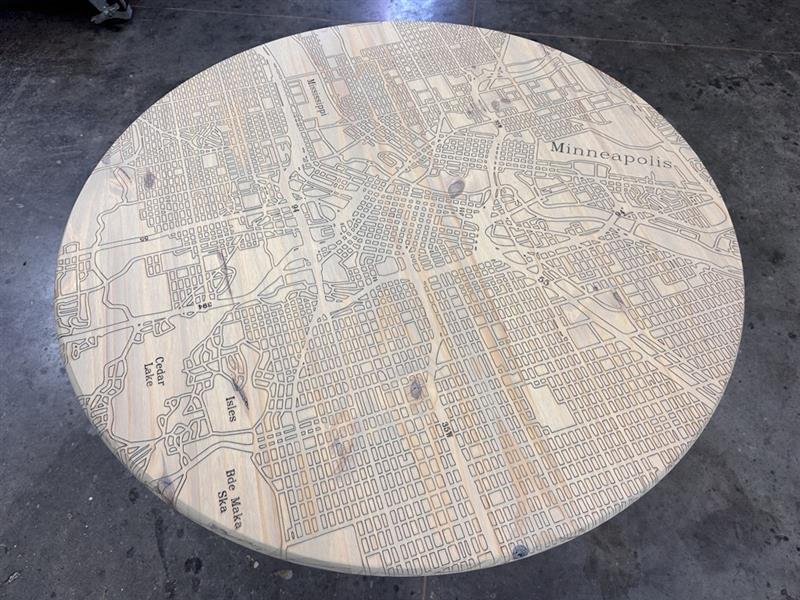
Then one morning… the machine simply stopped working. No warning. No explanation. It just wouldn’t run. This was the first computerized piece of equipment I had ever owned. I didn’t understand laser optics, electronics, or controllers. I only knew one thing. It didn’t work. I called the manufacturer. Their solution was to order replacement parts. I spent another $1,500 replacing components I hoped would solve the problem. But nothing changed. The machine still sat there. Silent.. Broken.. And unfortunately, there wasn’t much help available. There were no online training videos. No library of troubleshooting resources. Very little technical support. Eventually, frustration won.
I rolled the machine into the corner of my shop where it sat for years. Thousands of dollars, and an expensive reminder of a lesson I hadn’t learned yet.
Business equipment isn’t a purchase… it’s a partnership. That philosophy is one of the reasons I eventually found my way to ShopSabre. Years after that first laser experience, I wasn’t simply looking for another machine. I was looking for a company that understood manufacturing, built equipment for long term production, and would still be there when I needed help years down the road. Because business equipment shouldn’t be purchased because you need it for today’s project. It should be purchased because it solves tomorrow’s production problems. A machine should help you become more efficient. Produce more parts. Create better quality. And continue doing those things year after year.
The questions I wish I had asked; ironically, those are the exact questions I ask today when helping customers evaluate a ShopSabre CNC. Not because I’m trying to sell them a machine, but because I don’t want them repeating the same mistakes I made early in my own business.
Looking back, I wish someone had encouraged me to ask different questions before buying equipment.
Questions like:
- Will this machine withstand daily manufacturing use?
- Can I grow into this machine instead of outgrowing it?
- What happens if something breaks?
- How good is the technical support?
- Are replacement parts readily available?
- Is there training available after the sale?
- What does ownership look like five years from now? Not just five months?
Those questions matter far more than simply comparing price tags.
Don’t Judge the Technology… Judge the Machine
Over the years, I’ve spoken with countless business owners who tell me they “tried CNC” or “tried laser technology,” and decided it wasn’t for them. When I ask what happened, the story often sounds familiar. They bought the least expensive option. It wasn’t built for the production demands they eventually placed on it. It became unreliable. Support wasn’t available when they needed it. Eventually, the machine ended up sitting in the corner of the shop. Then they concluded the technology itself wasn’t worth owning.
The problem wasn’t necessarily CNC technology or laser technology. The problem was expecting an entry level machine to perform like an industrial production machine.
Those are very different things. Think Beyond the Purchase Price! Today, I encourage every business owner to shift the way they think about automation. Don’t start with: “How much does this machine cost?” Start with: “What will this machine produce?” How many hours will it save every week? How many additional jobs can it be complete each month?
Today, when I walk customers through a ShopSabre, I often think back to that first laser sitting broken in the corner of my shop. That experience changed the questions I ask, the advice I give, and ultimately why I believe support, reliability, and long-term ownership matter just as much as the machine itself.
Looking back ironically, that little $7,000 laser taught me one of the biggest lessons of my entire career. Not because it worked. But because eventually it didn’t. It changed the way I evaluate every piece of equipment I purchased today. Technology shouldn’t be judged by its best day. It should be judged by how it performs on its worst day, when you need support, when production is on the line, and when your customers are waiting. Because business equipment isn’t a toy. It’s an employee.
Choose one that will still be showing up to work ten or fifteen years from now.