

The Machine I Saw Twice (New vs Used Machines)
My dad and I used to spend weekends going to business auctions. Not because we always needed something, but because we genuinely enjoyed it. We’d walk through shops, study equipment, and see how other business owners approached manufacturing. Sometimes we would buy something, but most of the time we’d simply learn something. As a shop owner myself, I found it fascinating. Every auction was like getting a behind the scenes look at another company’s story. You could see what they made, how they organized their shop, what equipment they relied on, and where they succeeded or struggled.
One auction taught me a lesson I’ll never forget. I spent nearly an hour looking over a CNC that was being sold as part of a business liquidation. I crawled around it, inspected components, looked at the spindle, checked the rails, and paid attention to details most people would probably overlook. At first glance, it looked like a decent machine.
But the closer I looked, the more concerns I found. There was corrosion in places there shouldn’t have been corrosion. The spindle showed signs of pitting. Components that should have looked clean and protected showed evidence of years of exposure to moisture. Looking around the shop, it became obvious that compressed air quality hadn’t been a priority.
The next day, I saw that same machine listed online and if I hadn’t seen it the day before, I probably would have thought it looked like a great deal. The machine had been cleaned up. The photos were taken from the right angles. The lighting was perfect. The listing made it appear to be a clean piece of equipment.
But I knew better! I had just seen it less than twenty-four hours earlier.
That’s when I realized something important: The first time I saw that machine, I saw reality. The second time I saw that machine, I saw marketing.
The challenge with used equipment is that you’re often trying to evaluate years of ownership decisions in a matter of minutes.
A CNC machine is much more than a steel frame and a spindle. Inside that machine are servo motors, bearings, rails, bushings, seals, electrical components, pneumatic valves, regulators, and countless other parts working together to produce accurate results day after day.
Every one of those components depends on proper maintenance. Unfortunately, maintenance isn’t always visible. One thing I noticed repeatedly while looking at used CNC’s was how many shops operated without an air dryer on their compressed air system.
That may not sound like a big deal, but compressed air naturally contains moisture. Without properly drying that air before it enters the machine, moisture is constantly being introduced into pneumatic components throughout the system.
Over time, that moisture can create internal rust, corrosion and damaged seals. The scary part is most of that damage happens where you can’t see it. The machine may look beautiful on the outside while hidden wear is taking place internally. That’s why buying used equipment can sometimes feel like a gamble. Did the owner lubricate the machine properly? Was clean, dry air supplied to the machine? Sometimes the answer is yes and sometimes it isn’t and unless you personally know the history of that machine, you’re often making an educated guess.
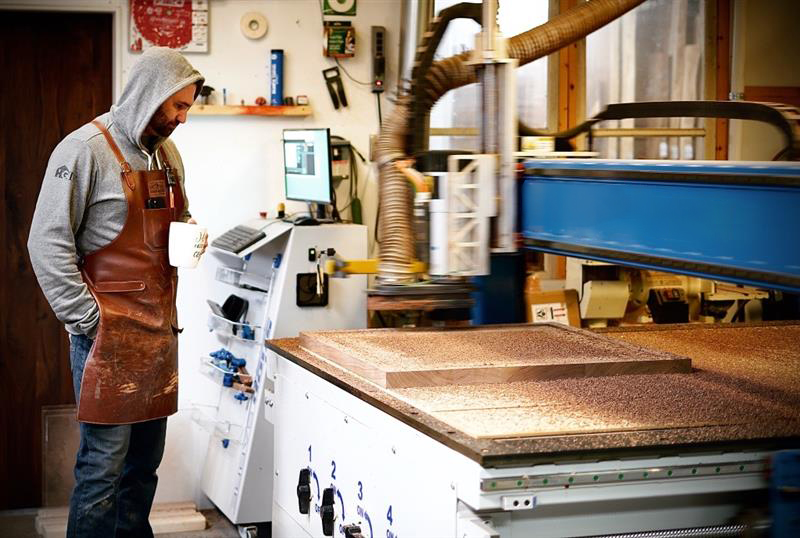
For me, one of the biggest reasons I chose to purchase a new CNC machine wasn’t because I needed shiny paint or unused components. It was because I wanted certainty.
I wanted to know where the machine came from. I wanted to know how it was built. But most importantly, I wanted confidence.
Because when your livelihood depends on production, confidence matters.
What many people overlook when comparing a new machine to a used machine is that you’re not simply purchasing steel, motors, electronics, and a spindle.
You’re purchasing support. You’re purchasing training. You’re purchasing access to technicians who understand the machine inside and out. You’re purchasing years of experience from a team whose job is to help you succeed.
As someone who spent nearly two decades running a manufacturing business, I can tell you there is tremendous value in knowing that when a question comes up, someone will answer the phone. There is value in having training available when you need it and there is value in having a support team that understands your machine because they built it.
At ShopSabre, we often talk about machine construction, spindle technology, and precision. Those things absolutely matter. But confidence matters too!
The confidence that comes from knowing your machine’s history. The confidence that comes from proper training. The confidence that comes from having support standing behind you when you need it.
Because at the end of the day, a CNC machine isn’t just a piece of equipment. It’s a business tool and sometimes the best investment isn’t the machine with the lowest price tag. It’s the machine that allows you to sleep a little better at night.